
Choosing the right welding cable size is critical for safety, performance, and preventing costly downtime. Welding cables carry high currents in demanding environments, and undersized or mismatched cable can overheat, lose efficiency, or fail prematurely.
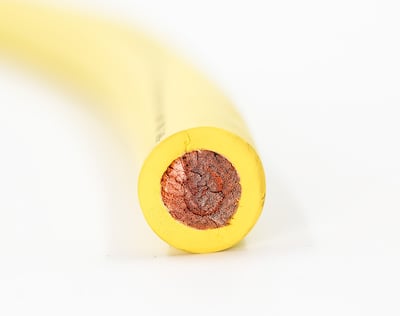
Welding Cable Size Chart (AWG & kcmil)
|
Cable |
Approx. |
Ampacity |
Typical |
Super-Trex 600V Weld Cable Diameter |
|---|---|---|---|---|
| 6 AWG | 0.32 in | 55–120 amps | Light-duty welding, short runs | 0.37 in |
| 4 AWG | 0.35 in | 85–160 amps | Light/medium-duty welding | 0.45 in |
| 2 AWG | 0.42 in | 115–200 amps | Medium-duty welding, short runs | 0.54 in |
| 1/0 AWG | 0.52 in | 150–300 amps | Heavy-duty welding, longer runs | 0.66 in |
| 2/0 AWG | 0.58 in | 200–400 amps | High-output welders, long cable runs | 0.70 in |
| 3/0 AWG | 0.64 in | 250–500 amps | Industrial welding, extra-long runs | 0.79 in |
| 4/0 AWG | 0.72 in | 300–600 amps | Very high-amperage, large welders | 0.9 in |
*Ampacity depends on cable length and duty cycle. Longer runs require larger sizes to reduce voltage drop.
Tip: If your welding application is near the upper end of an ampacity range or requires cable runs longer than 50 feet, you might consider moving up to the next cable size to help reduce voltage drop and maintain welding performance. (Unless the cable size is specified as appropriate for extra-long runs.)
How to Use a Welding Cable Size Chart
A welding cable size chart is most effective when used alongside two key variables: welding amperage and total cable length. Start by finding your welding machine's output amperage, then locate the corresponding ampacity range in the chart above.
For example, a welder operating at 180 amps would fall within the 115 to 200 amp range shown for 2 AWG cable. However, cable length should also be considered. Longer cable runs can increase voltage drop, which may warrant selecting a larger cable size depending on the application.
In addition to amperage, review the Typical Application column in the welding cable size chart. Sizes such as 1/0 AWG, 2/0 AWG, and 3/0 AWG are commonly selected for applications involving longer cable runs, where minimizing voltage drop becomes increasingly important. As cable length increases, resistance increases, making proper cable sizing critical for efficient operation.
Why Welding Cable Durability Matters in Industrial Facilities
For maintenance teams, welding cable performance isn't just about carrying current. In manufacturing plants, refineries, steel mills, and processing facilities, cables are routinely dragged across concrete, exposed to sharp edges, and subject to frequent flexing. Premature cable failure can delay repairs, increase troubleshooting time, and contribute to unplanned downtime.
When evaluating welding cable options, consider both electrical performance and mechanical durability. A cable that resists abrasion, impact, and harsh industrial conditions can help reduce replacement frequency and lower total cost of ownership over time.
Super-Trex® 600V Welding Cable
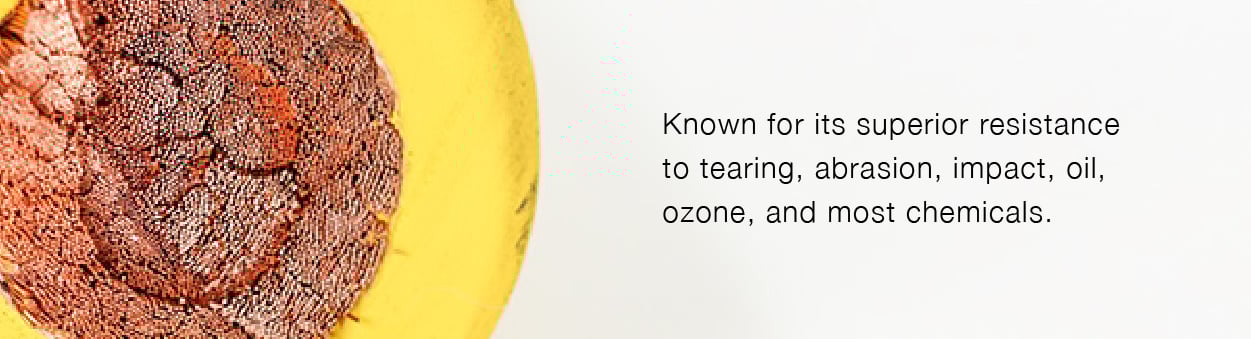
When comparing welding cables, you may notice that our Super-Trex® 600V Welding Cable has a slightly larger outside diameter than standard options. This is by design — the added thickness isn’t extra bulk. It’s built-in protection.
- Improved Jacket Material: Engineered from a heavy-duty thermoset elastomer (TSE), this extra-thick jacket delivers superior durability and abrasion resistance compared to standard PVC.
- Increased Diameter for Protection: The slightly larger cable profile provides a cushion that protects the copper stranding from mechanical stress, impact, and accidental damage.
- Optimized Jacket Thickness: Designed to resist cuts and tears, the jacket prevents strand breakage and reduces the risk of electrical failure in demanding welding environments.
Understanding Wire Sizes
- 1/0 vs. 2/0 Welding Cable: The “0” sizes (often called “aughts”) are thicker than standard gauges. A 2/0 cable is larger in diameter and carries more amperage than a 1/0 cable, making it better for long runs and high-output welders.
- Amps vs. Volts: Amperage measures the amount of electrical current; voltage measures electrical pressure. Welding cable is rated primarily by amps, since that determines conductor size.
Why Cable Length Matters
FAQs Welding Cable Size Chart & Amp Ratings
Q: How do I read a welding cable size chart?
A: A welding cable size chart compares cable gauge (AWG or kcmil) to ampacity and recommended application ranges. To select the proper size, identify your welding amperage, determine the total cable length needed, and then choose a cable large enough to handle both the current and distance.
A: Unless a cable is explicitly stated to be designed for longer runs, yes, this is often true. Longer cable runs create more electrical resistance and voltage drop. When welding over extended distances, moving up one or more cable sizes can help maintain arc performance and prevent overheating.
A: Industrial maintenance teams typically benefit from highly flexible, fine-stranded copper welding cable with a rugged jacket designed to resist abrasion, impact, chemicals, and harsh environmental conditions. Durability is particularly important in manufacturing plants where cables are frequently moved and exposed to mechanical stress. Check out Super-Trex® 600 Volt Welding Cable to see how careful engineering can help extend the life of a cable in harsh applications.
A: Undersized welding cable can overheat, experience excessive voltage drop, reduce weld quality, create inefficient equipment performance, and shorten cable lifespan. In severe cases, it may create safety hazards or lead to unplanned downtime.


