

Wind turbines are marvels of modern engineering, enabling the shift toward clean, renewable energy across North America. But inside every towering structure lies a complex network of electrical systems—powering pitch control motors, gear boxes, brakes, orientation systems, and generators—all reliant on one critical component: wire and cable.
Improper cable management can cause premature wear, brush dust contamination, or unexpected system failures. For wind turbine OEMs and field service technicians, understanding how to route, secure, and protect cable systems is essential to maximizing uptime and reducing costly repairs.
In this article, we’ll discuss practical cable management best practices for wind turbines—from nacelle to tower base—and highlight ATPC (Amphenol TPC Wire & Cable) solutions that make installation and on-site repairs faster and more reliable.
Design for Movement: Vibration and Flexing

Inside the nacelle, cables connect moving parts like the generator, brake system, and pitch control motors. These cables must flex and twist continuously as the nacelle rotates to track wind direction.
Best Practice:
Use high-flex cables engineered for demanding industrial environments. ATPC’s Super-Trex® VFD Shielded Cable is engineered to withstand flexing, making it ideal for dynamic environments such as inside the slip ring harness.
Route Cables Thoughtfully Around Key Components
Cables must pass through and around major turbine components like the gearbox, hub, transformer, and orientation control system. Incorrect routing near rotating parts or sharp edges can lead to abrasion or failure.
Best Practice:
- Use wide-radius routing to reduce mechanical stress.
- Secure cables with cushioned clamps and avoid over-tightening.
- Keep cable runs clear of moving parts inside the nacelle and hub assembly.
Accelerate Repairs with Quick-Connect Cable Assemblies
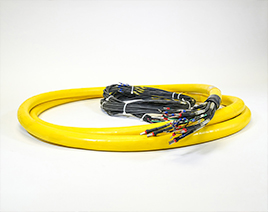
When a turbine is offline, every minute counts. Traditional repair methods—like splicing or replacing full cable runs—can be time-consuming and dangerous in high-elevation nacelle environments.
Best Practice:
Use quick-change cable assemblies and field-installable connectors for faster, safer repairs. ATPC offers:
- Slip ring harness assemblies
– pre-terminated and sealed to prevent brush dust failures. These reduce troubleshooting time and eliminate the need for on-site termination.
- Mini and Micro connectors– available in 3-12 pole, straight and 90° configurations, male and female. With an IP67 rating, these ATPC connectors resist dust and spray, and are simple for field techs to install with basic tools—no crimping or soldering required.
- RJ45 cable assemblies
– ATPC ruggedized Ethernet assemblies eliminate the fragile plastic connectors that break easily in the field. These industrial-grade connectors are panel-mountable and easy to snap in during repairs or upgrades.
Technician Benefits:
- Drastically reduces install and repair time
- No special tools or training needed for most connectors
- Minimizes crane time or nacelle access frequency
- Reduces fatigue and improves safety with easy-to-handle components
Protect Against Environmental Hazards
.jpg?width=800&height=514&name=shutterstock_1454940068%20(1).jpg)
Wind turbines operate in remote and extreme environments—from arctic tundra to salt-heavy coastal air. Cables exposed to these conditions need enhanced jacket performance.
Best Practice:
Choose cable jackets that resist:
- UV radiation
- Oil and chemical exposure
- Cold temperature impact and bending
ATPC offers cables with advanced thermo-set rubber and TPE jacketing that maintains flexibility in freezing temperatures while resisting moisture, vibration, and mechanical wear.
Avoid Brush Dust Failures with Sealed Assemblies
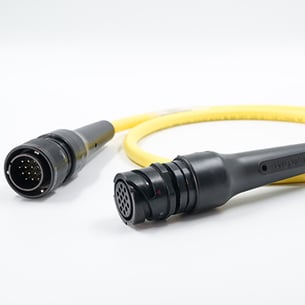
A common failure point in wind turbines is brush dust contamination within the slip ring assembly, which can compromise signal transmission.
Best Practice:
Use backmolded cable assemblies from ATPC specifically designed for harsh environments. These pre-terminated, dust-sealed assemblies are engineered to prevent failures caused by particulate ingress and ensure uninterrupted signal flow.
Document, Label, and Inspect
Lack of documentation or improper labeling creates confusion during maintenance or upgrades.
Best Practice:
- Use heat-resistant, UV-proof labels
- Keep digital wiring diagrams updated
- Conduct routine inspections, especially in high-stress areas like pitch control or generator circuits
Supporting the Future of Clean Energy
Energy leaders like NextEra Energy, Ørsted, Iberdrola, and Vestas are building the future of wind energy—onshore and offshore. With thousands of turbines spinning across North America and beyond, they rely on partners that provide durable, proven cable solutions.
ATPC is proud to support these efforts with products engineered specifically for the wind industry—delivering high-flexibility, fast-installation, and harsh environment protection where it’s needed most.
Conclusion
Wind turbines are complex, high-performance machines that demand robust, flexible, and easy-to-maintain cable systems. By adopting smart cable management strategies—like using ATPC cables, sealed assemblies, rugged connectors, and fast-locking power solutions—OEMs and field techs can drastically reduce downtime and ensure safe, long-lasting turbine operation.
Ready to Upgrade Your Wind Turbine Cabling?
Contact Amphenol TPC Wire & Cable today to discuss how our custom-engineered cable solutions can improve installation time, reduce field failures, and boost reliability across your wind energy operations.

